The Decades of Derussy: 1950-1960
Throughout the 1950s, the prime real estate of Fort DeRussy made it a hotly contested and highly visible representation of the fight for the post-war return of military lands. As Army Secretary Wilber M. Brucker explained, "the army has no intention of giving up the choice bit of real estate in Waikiki." The Army solidified that intention in March 1956, designating Fort DeRussy as a permanent military installation. It served first and foremost as a recreation area and secondly, as a reserve facility.
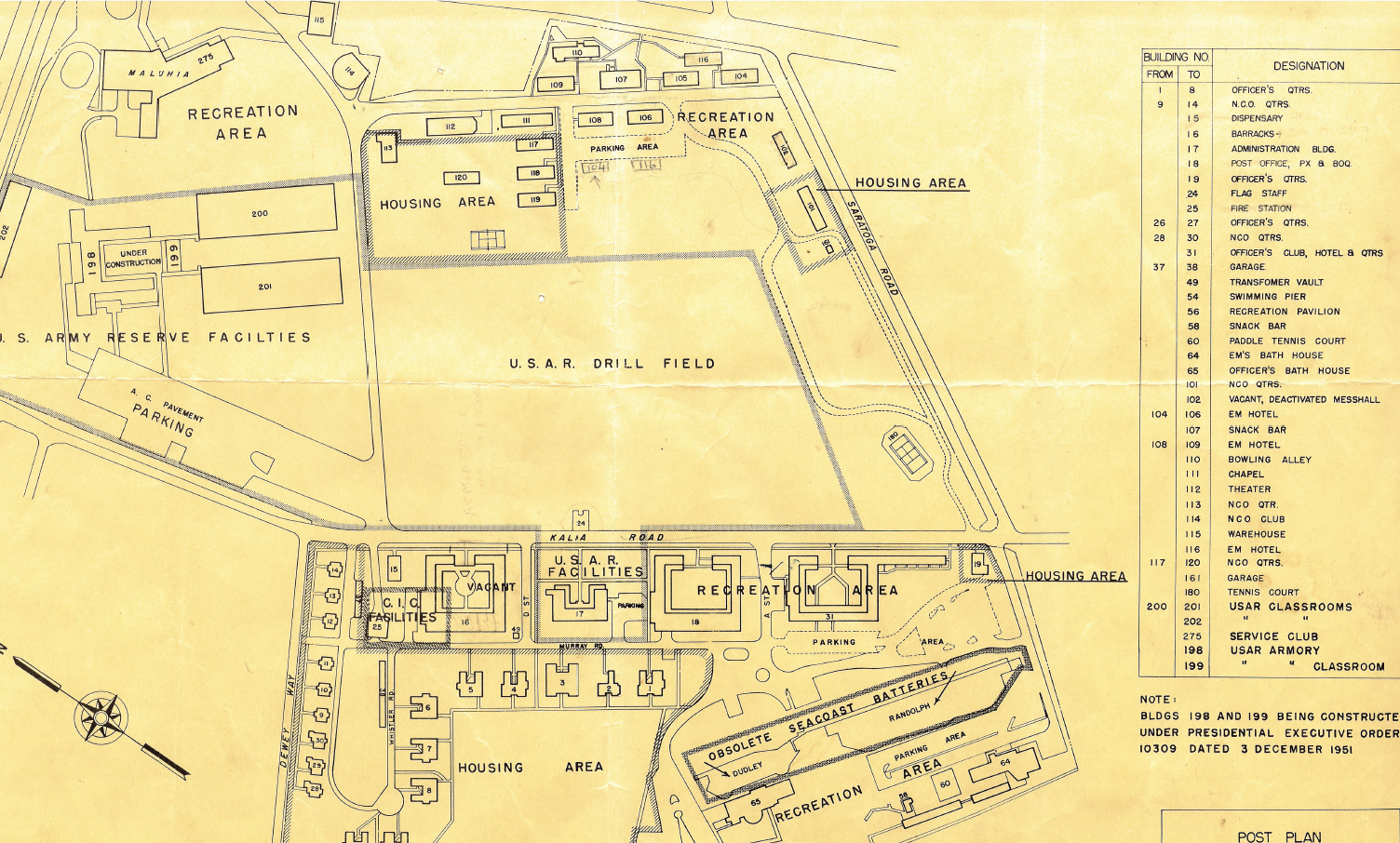
As evident between the Fort DeRussy post plan dated December 1951 (above) and the below aerial photo by US Army photographer Al Chang from 1952, the fort was transitioning from an active military base to a reserve and recreational facility. By 1959, Fort DeRussy officially gained the additional designation as an U.S. Army Reserve Center.
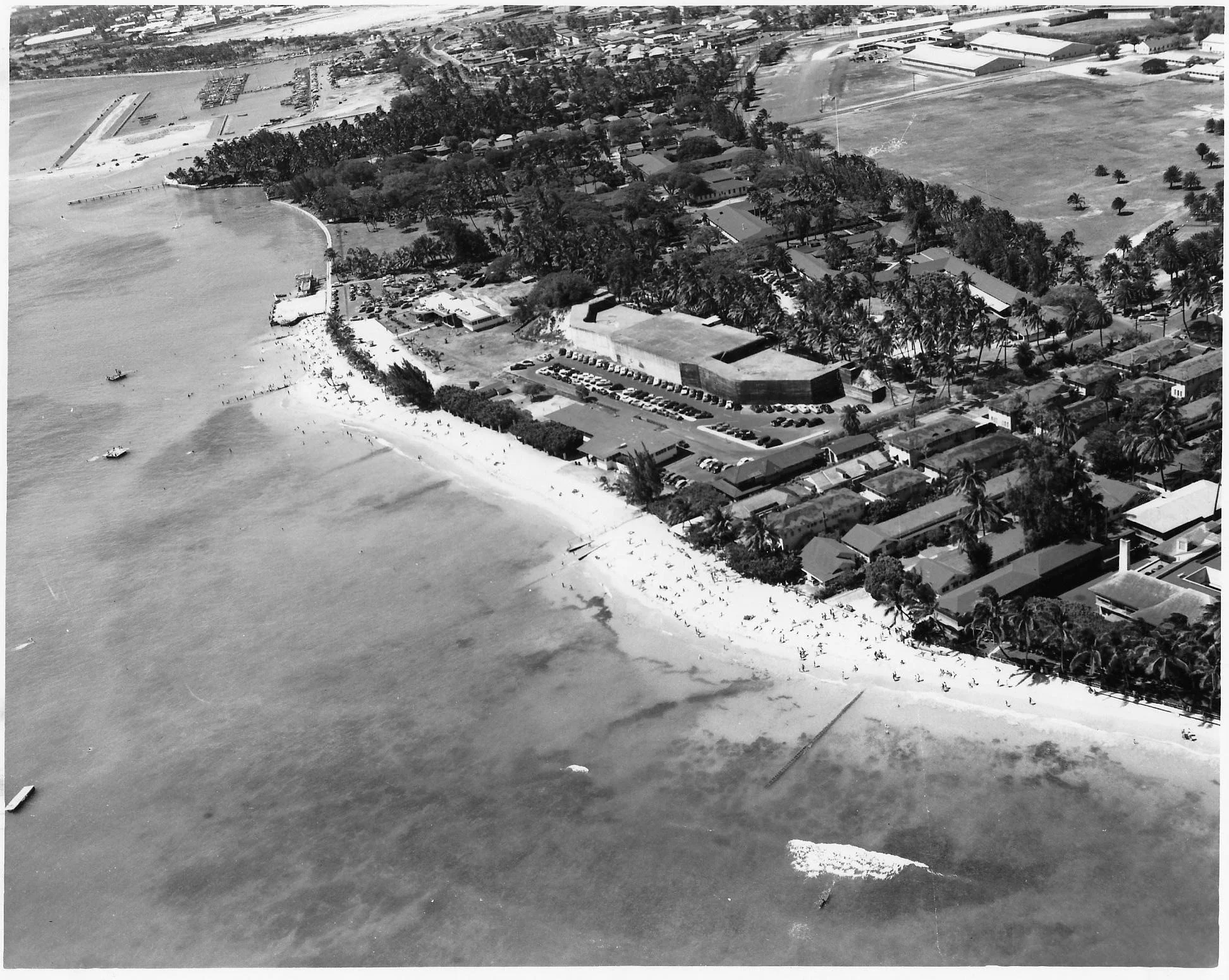
USAMH 3027 Photo by Army Photographer Al Chang echoes the above post plan. The cement structures Battery Dudley and Randolph sit at center.
The 1943 built Maluhia Service Club that sat on the Mauka (toward the mountains) corner of Fort DeRussy was a foundation of the Fort’s recreational offerings. One local soldier, PFC Kenny Freedman, recalled one particular Saturday night in June 1950 at the Maluhia Service Club when the night did not go according to planned. The volunteers of the Girls Service Organization “were very gracious hostesses. Many of us enjoyed their company and friendship. [Then,] in the middle of the dance, a Marine Master Sergeant stopped the band in the middle of ‘Blue Moon’ and told us to report back to our duty stations.” North Korea had invaded South Korea. And PFC Freedman and his fellow 5th Regimental Combat Team (RCT) members would be in South Korea within a month.
Activated in Korea amidst the peninsula’s post-WWII occupation, the modern 5th RCT spent six months there before making the move to Schofield Barracks. Once settled in Hawaii, the 5th RCT conducted basic training for local recruits, many of whom stayed on to serve with the unit, giving it a strong Hawaiian character and an ethnic mix that was unusual in the pre-Korean War Army. After the Korean War began, the unit reached full strength in part from mobilized Reserve and National Guard soldiers. Many of these reservists served during WWII and continued to serve post-war in the highly decorated 100th Battalion and 442d Regimental Combat Team, which then called Fort DeRussy home.
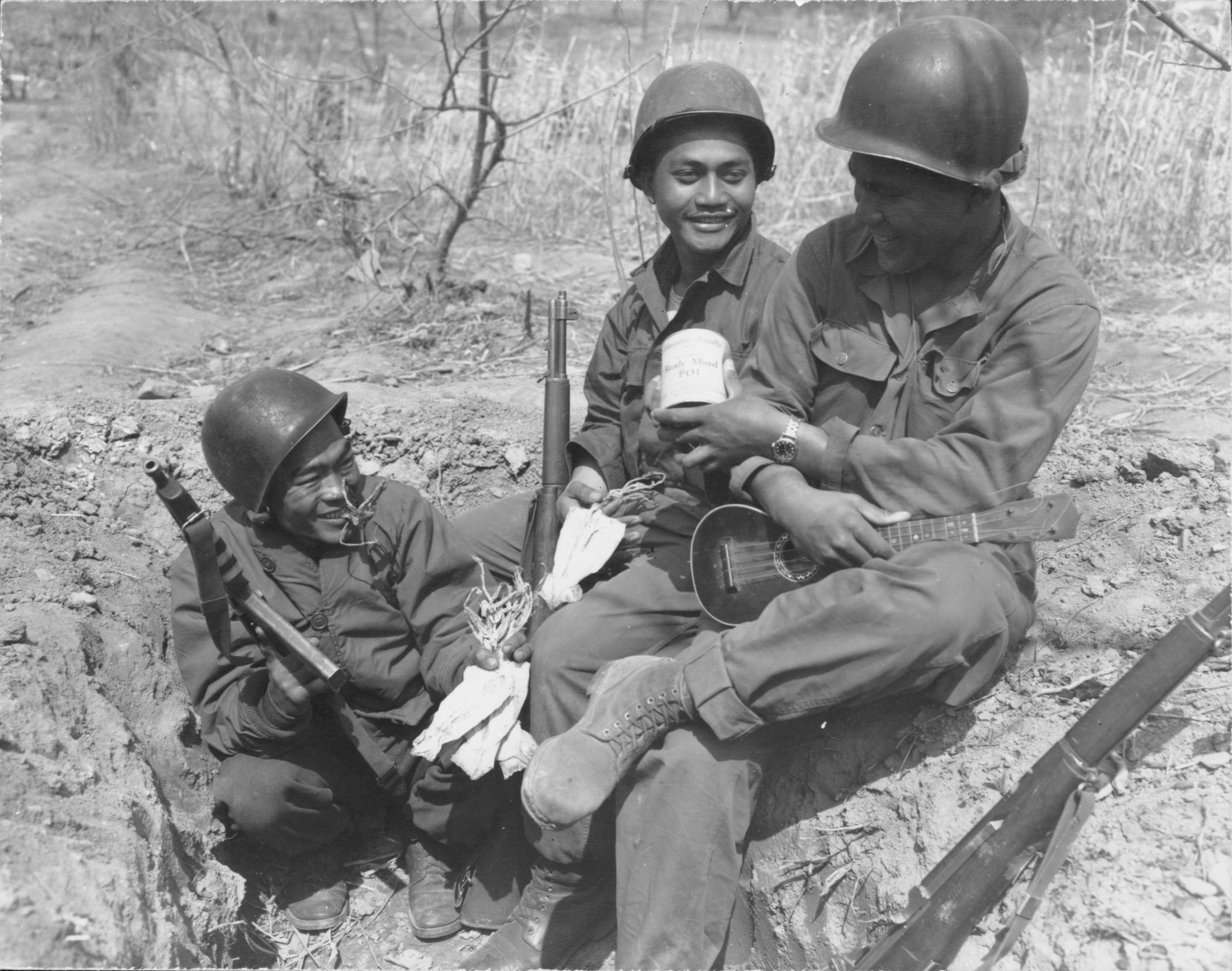
Members of the 5th RCT bringing a little Hawaiian atmosphere to Korea. Shown are SFC Robert Muramoto, Honolulu, SFC Castor Corpuz, Waipahu, and SFC David Kauanu, Honolulu.
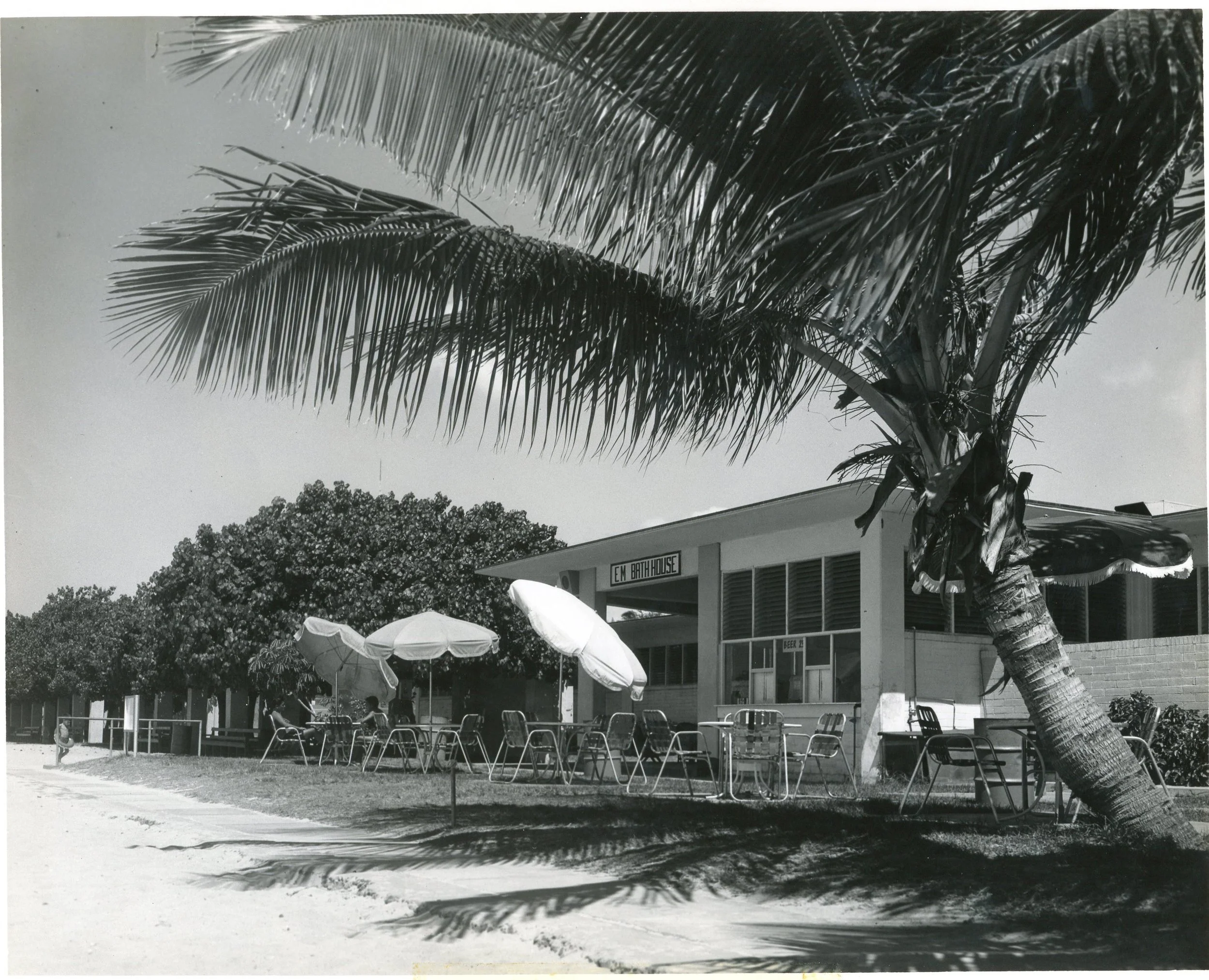
With much of its reserve component serving in Korea, Fort DeRussy continued its role as a recreation hub for locals and military alike. Amenities like the Enlisted Men’s Hotel, officer and enlisted bathhouses, and a steady lineup of Hawaiiana experiences maintained Fort DeRussy’s mission to serve as a respite for US military members in the heart of Honolulu.
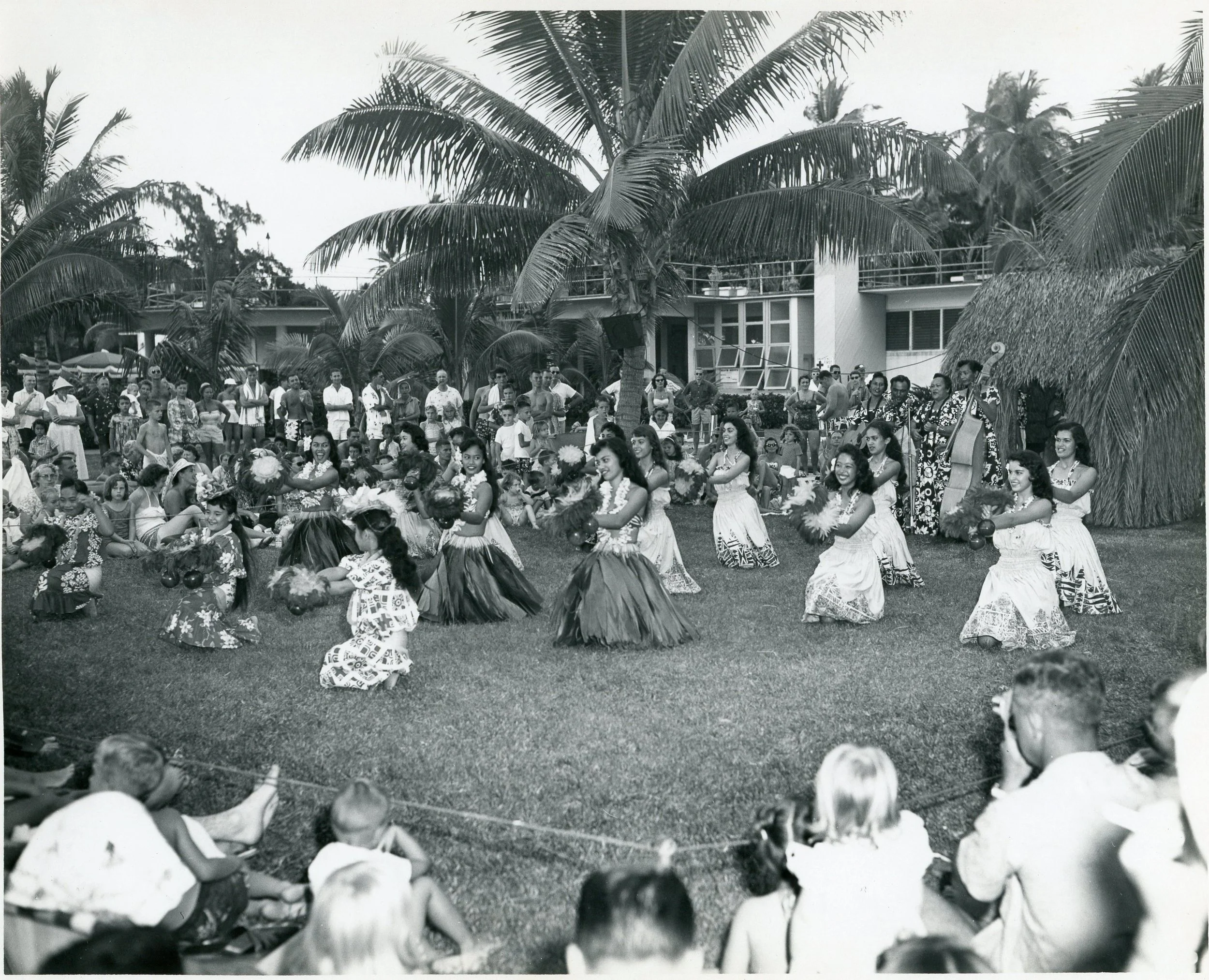
USAMH 2170 Hula Shows in front of the Maluhia Service Club in 1958.
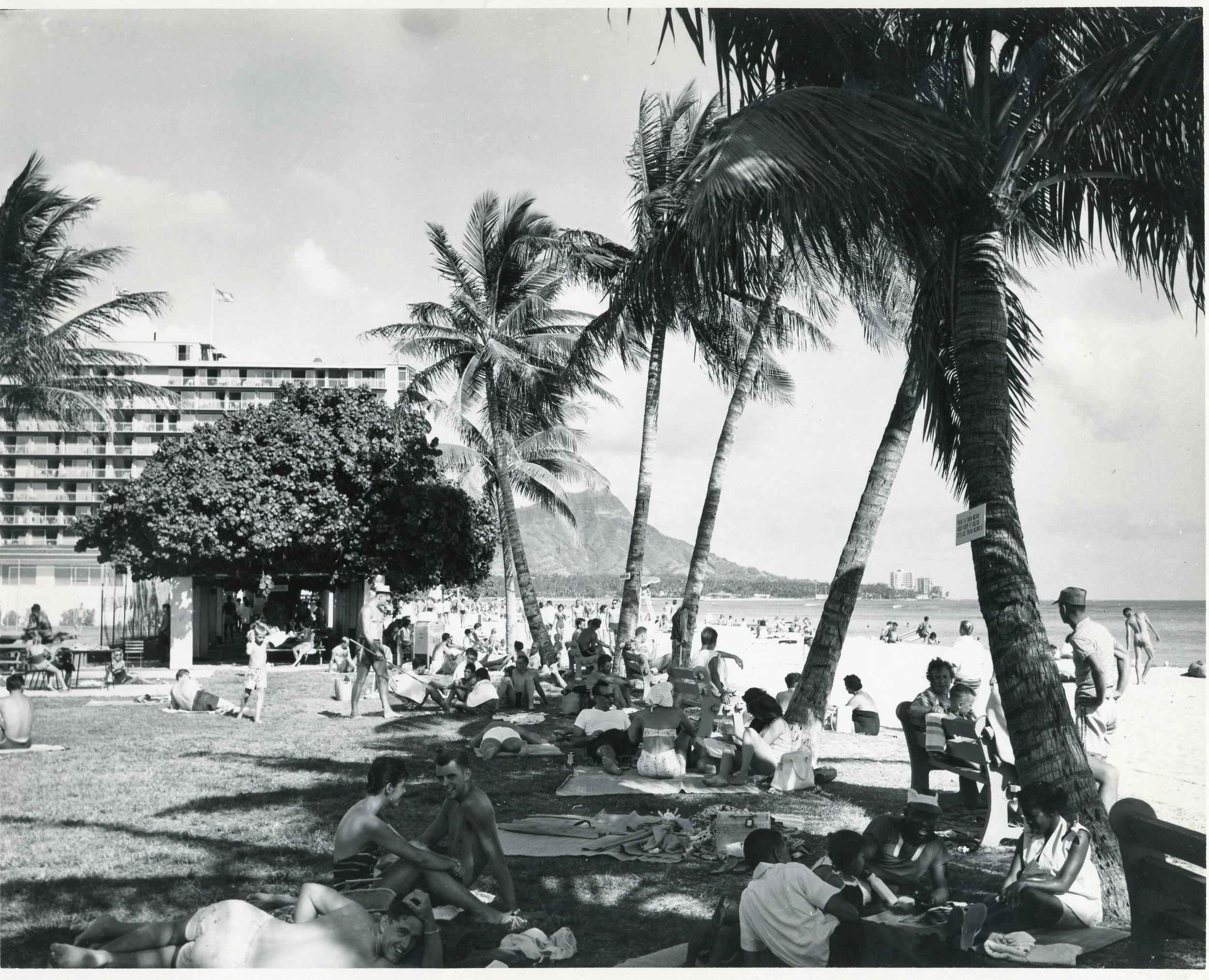
USAMH 2162 (above) and USAMH 2180 (below). This pair of photos taken in the late 1950s might look familiar. Not much has changed in the southeastern corner of Fort DeRussy. There are still pergolas and courts (recently turned into pickleball courts), however, the Enlisted Men’s Bath House (seen below) that originally sat to the right of the pergola is now the location of the public restrooms.